Quote:

Showing posts with label womanist final project. Show all posts

Monday, February 01, 2021

5 scholars articulation of what womanist biblical interpretation entails

Pictured in the top row from left to right are Rev. Yolanda Norton and Rev. Dr. Wil Gafney.
On the bottom row from left to right are Rev. Dr. Renita Weems, Rev. Dr. Mitzi J. Smith, and Rev. Dr. Vanessa Lovelace

So what exactly does womanist biblical interpretation entail? Dr. Nyasha Junior states, “I wish that I could provide a definition of womanist biblical interpretation, but I confess that I cannot offer a clear definition because one does not exist” (Loc 2639). Junior says the lack of consensus about what womanist biblical interpretation is “is somewhat masked by the generalizations made by some womanist scholars in describing womanist biblical interpretation in terms that may give the mistaken impression that a consensus position exists” (Loc 3000). She criticizes the lack of consistency and says their “loose usage” of Alice Walker’s definition means that the word itself ends up being the main thing their interpretations have in common. But I’m not sure I agree with her assessment. It seems to me that each of the five womanist bible scholars pictured and listed above is not only informed by Alice Walker’s definition of “womanist” but doing similarly inspired things in their womanist interpretation. First, they emphasize "talking back to the text" and "interrogating the text" and other interpretations of the text that have harmed people. Secondly, they each emphasize an intersectional approach that prioritizes the experiences of Black women and oppressed people in their interpretation. I will highlight these points for each of these five scholars below.

1. The first part of Alice Walker's definition describes a womanist as a “black feminist or feminist of color” and explains how the term came from a “black folk expression” when an adult would say a girl was acting “womanish” (like a woman), “acting grown-up” or “trying to be grown” (xi). I see each of these scholars using that as a point of emphasis for "talking back to the text" and "interrogating the text".

Gafney: “Above all, this work is womanist because it is womanish. That is, I am talking back to the text, challenging it, questioning it, interrogating it, unafraid of the power and authority of the text, just as a girl-growing-into-a-woman talks back to her elders, questioning the world around her in order to learn how to understand and navigate it” (9).

Smith: She says she writes "as an act of womanist resistance, an act of sass and talk-back to (con)texts that disturbingly re-inscribe structures of oppression and are oppressive, that invite us to be complicit in oppression, that primarily depict God as a violent male, that subordinate the other, and that embody and sacralize (the secular is elevated to the level of the sacred) androcentrism, patriarchalism, and misogyny" (3).

Lovelace: In the introduction to Womanist Interpretations of the Bible, she co-wrote with Gay L. Byron, "all interpreters of sacred texts are responsible for exposing and analyzing the power dynamics in both the ancient texts and the interpretations of the texts that have been used to further injustices and global systemic challenges" (15). Exposing and analyzing power dynamics in the texts themselves and the interpretations is the work of "talking back to the text" and "interrogating the text."

Weems: "The Bible cannot go unchallenged in so far as the role it has played in legitimating the dehumanization of people of African ancestry in general and the sexual exploitation of women of African ancestry in particular. It cannot be understood as some universal, transcendent, timeless force to which world readers—in the name of being pious and faithful followers—must meekly submit. It must be understood as a politically and socially drenched text invested in ordering relations between people, legitimating some viewpoints, and delegitimizing other viewpoints." (46) 

Norton: The power of womanism is its refusal to try to “explain away elements of biblical literature that modern sensibilities might find problematic or objectionable in order to produce a more congenial text,” and its willingness to expose those elements and look at the implications for today (266). (In other words, the power of womanism for Norton is its willingness to talk back to the text.)

2. The second part of Walker's definition of womanist says, “a woman who loves other women, sexually and/or nonsexually. Appreciates and prefers women’s culture, women’s emotional flexibility...  and women’s strength….  Committed to survival and wholeness of entire people, male and female." (xi). And part four of Walker's definition says “Womanist is to feminist as purple to lavender” (xii.). 

I see these five scholars using these parts of Walker's definition as related to their intersectional emphasis which prioritizes Black women's experiences in their interpretation and keeps them concerned with the oppressions that happen at the intersections of race/gender/sex/class etc. All of them emphasize intersectionality and the way multiple oppressions compound each other. 

Gafney lists the primary womanist principles that shape her book, Womanist Midrash, as: "(1) the legitimacy of black women’s biblical interpretation as normative and authoritative, (2) the inherent value of each member of a community in the text and interpreting the text, (3) talking back to the text, and (4) making it plain, the work of exegesis from translation to interpretation”(8). Gafney also talks about "privileging the crossroads between our Afro-diasporic identity (embodiment and experience) and our gender (performance and identity)" in the process of interpretation (7).

Smith says her reading perspective is "a womanist intersectional approach that privileges or prioritizes the experiences, voices, traditions, and artifacts of African American women (and their communities) as sources of knowledge production, critical reflection, and ethical conduct" (2). 

Lovelace writes that she hopes their work "will lead to even more collaboration and conversations that will help keep the interests of black women and other women of color "at the forefront of interpretations of biblical and extrabiblical sources" (16).

Weems says womanist hermeneutics of liberation starts with African American women’s "will to survive and thrive as human beings and as the female half of a race of people who live a threatened existence within North American borders" (46). The interests and experiences of Black women are privileged over theory and harmful interpretations of ancient texts, even sacred ancient texts (46).

Norton: In her essay, “Silenced Struggles for Survival: Finding Life in Death in the Book of Ruth”  Norton argues that the book of Ruth is a more complicated narrative than traditional interpretations have permitted. Norton says “the text masquerades as a treatise on the inclusion of the other” when it actually seems to be “a commentary on the assumed virtue of membership and participation in the Israelite community” (265). Norton is criticizing the implication that it is a good and honorable thing to sacrifice everything - one’s land, people, god, even one’s own self, “for the supposed privilege of participating in what the text depicts as the most desirable community,” in this case, Israel (265). Her entire essay is concerned with an intersectional approach to interpretation that is prioritizing the experience of the character who is most marginalized in this story.

***************

Works Cited

Byron, Gay L. and Vanessa Lovelace. Womanist Interpretations of the Bible : Expanding the Discourse. SBL Press, 2016.

Gafney, Wilda C. Womanist Midrash: A Reintroduction to the Women of the Torah and the Throne. Louisville, KY: Westminster John Knox Press, 2017.

Junior, Nyasha. An Introduction to Womanist Biblical Interpretation. Louisville, KY: Westminster John Knox, 2015.

Norton, Yolanda. “Silenced Struggles for Survival: Finding Life in Death in the Book of Ruth,” in  I Found God in Me: A Womanist Biblical Hermeneutics Reader, edited by Mitzi J. Smith, Eugene, OR: Cascade Books. 2015.

Smith, Mitzi J. Womanist Sass and Talk Back: Social (In)Justice, Intersectionality. Eugene, OR: Cascade, 2018.

Walker, Alice. In Search of Our Mothers’ Gardens: Womanist Prose. Orlando, FL: Harcourt, Inc., 1983.

Weems, Renita. “Re-reading for liberation: African American women and the Bible,” in I Found God in Me: A Womanist Biblical Hermeneutics Reader, edited by Mitzi J. Smith, Eugene, OR: Cascade Books. 2015.

This is part of my final project for my class on Womanist Interpretation of the Hebrew Bible. You can see the intro post here which is a linked table of contents.

Get new posts in your email:

Rev. Dr. Mitzi J Smith: “This Little Light of Mine” The Womanist Biblical Scholar as Prophetess, Iconoclast, and Activist

Rev. Dr. Mitzi Smith, mitzijsmith.com
Twitter: @MitziJSmithPhD 

Professor of New Testament at Columbia Theological Seminary.
You can read more about Dr. Smith and read my summary of her introduction to her book, Womanist Sass and Talk Back, here

Essay: “'This Little Light of Mine' The Womanist Biblical Scholar as Prophetess, Iconoclast, and Activist" 

**********
In this essay, Smith shows how womanist biblical scholars, like so many Black women who came before them, can function as prophetess, iconoclasts, and activists (126). Through these three roles Black women seek to "dismantle racism, sexism, classism, neocolonialism, and heterosexism as interconnected oppressions and systems that invade and infiltrate the lived realities of black women and marginalized communities" (126). Smith writes, "We recognize that God dwells in us as peripheral prophetesses, that God resides in the margins with the oppressed, and that from the margins we can and are called to speak truths to powers, to shatter oppressive strongholds, iconic traditions and beliefs, and to actively participate in the revolution to transform this world into the likeness of God’s incarnate justice, peace, and love" (126).

Main points:

  1. Womanist biblical scholars acknowledge their social location and the lenses with which they read the Bible, understanding that every interpreter’s “context both limits and illumines interpretation,” (Weems 52) whether or not the person is aware of it and admits it: "All readers, readings, and texts are contextual and subjective (112).

  2. A womanist biblical scholar is a Prophetess, "infused with and guided by the Spirit of God.. as [she] confronts and names oppressions in texts, contexts, readers, readings, and cultures" (112. Womanist biblical scholars, like "proto-womanists and Civil Rights activist Mrs. Fannie Lou Hamer" go beyond their written work to "raise their voices, and lift their feet to write and right, to teach and to preach, and to sing “truth to power” with a goal toward transformation and the dismantling of oppressions and oppressive structures, toward revolutionary change (113).
    "Womanist biblical scholars declare that black women and other women of color experience and produce truth and light; they are repositories and creators of legitimate epistemologies. All knowledge production is subjective. Womanist biblical scholars acknowledge the existence of more than one truth, especially with regard to biblical texts, contexts, readings, and readers; truths and potential truths exist; malestream biblical scholars have no monopoly on truths." (113).
  3. Womanist biblical scholars know that "the God of the Bible is the God of the oppressed, the God of liberation and they interpret Scripture "within the overarching hermeneutic of liberty and justice for the oppressed and most marginalized" (115).

  4. A womanist biblical scholar is an Iconoclast, knowing that many times the knowledge and systems that have been "produced, petrified, and sacralized by malestream (white men and other men) and white feminist scholars" will not address the needs of black women and will be oppressive. Therefore, the work of womanist biblical scholars "is necessarily sometimes iconoclastic" needing to challenge things that have been revered as holy (119).
    "In confronting biblical texts, contexts, and interpretive traditions, including long-held theological constructions and commentaries that fail to consider the implications of race, gender, class, and empire womanist biblical scholars must sometimes break down and discard traditional, putative interpretive icons or images and paradigms that are oppressive of women of color and our communities and dismissive of our struggles and concerns. (119).
  5. The womanist biblical scholar is an Activist, concerned with the everyday lives of black people "and their access to necessary resources, the recognition of their civil rights, and the exercise of agency and the negotiation of power as it relates to the health and wholeness of every member of the community and in the world" (122). Therefore they "read, exegete, and write as agents of social change in the church, in the community, and in the world" (122).

  6. Finally, womanist biblical scholars also challenge (and seek to change) "unjust interpretations, theologies, and pedagogies of our sisters" while also allowing God "to read, indicted or convict, and transform her [own] soul so that she will speak the truths to powers wherever injustice is found. She must constantly make available to God her fallible humanity so that God might continually encourage, transform, and regenerate her for the work she is called to do for herself and her community" (123).

Works Cited

Smith, Mitzi J. “'This Little Light of Mine' The Womanist Biblical Scholar as Prophetess, Iconoclast, and Activist" in I Found God in Me: A Womanist Biblical Hermeneutics Reader. Edited by Mitzi J. Smith, Eugene, OR: Cascade, 2015.

Weems, Renita, “Re-Reading for Liberation: African American Women and the Bible,” in Womanist Theological Ethics: A Reader, ed. Katie Geneva Cannon, Emilie M. Townes, and Angela D. Sims. Louisville: Westminster John Knox, 2011. 

**********

Get new posts in your email:

Rev. Dr. Kelly Brown Douglas: “Marginalized People, Liberating Perspectives: A Womanist Approach to Biblical Interpretation”

Rev. Dr. Kelly Brown Douglas is an African-American Episcopal priest, womanist theologian, and the inaugural Dean of the Episcopal Divinity School at Union Theological Seminary. She is also the Canon Theologian at the Washington National Cathedral. She is widely published in national and international journals and other publications.  Her groundbreaking and widely taught book Sexuality and the Black Church: A Womanist Perspective (1999) was the first to address the issue of homophobia within the black church community.  Her book, Stand Your Ground: Black Bodies and the Justice of God (2015), examines the challenges of a “Stand Your Ground” culture for the black church.

**********
Essay: “Marginalized People, Liberating Perspectives: A Womanist Approach to Biblical Interpretation” 

Thesis: We are called to listen to and learn from those on the underside of church and society (46). We need to value the perspectives of the “least of these,” the underside,” those who are marginalized and oppressed (46). When we view God from the perspective of the most marginalized people in the Bible we will more clearly see that "the God of our theologies is not necessarily the God of our lives," and that God is truly transcendent, and so cannot be contained by any theological system or "exegetical attempt to make simplistic the complexity and mystery of a transcendent God" (46). Reading in solidarity with the underside shows us more clearly what it means "for God to be a liberator with those who are most oppressed, even as they are represented in the Bible" (46). Furthermore, if our claims about God are not liberating for the marginalized and oppressed, then we must reevaluate those claims (46).

Main Points:
  1. Douglas writes as a theologian, not a biblical scholar. Even though the Bible is a significant source for Christian theology, and biblical interpretations have theological implications, the tools of the disciplines are different (44). But in the same way that our theologies tend to reflect more about the person doing them as they do about God, the same is true for our perspectives on the Bible (44). No one does theology or biblical interpretation in a vacuum - it is always informed and influenced by one's social, historical, and cultural context (44). 
    "The texts we go to, the way we read those texts, and the authority we give the Bible itself are inevitably informed by who we are as embodied beings, how we experience life socially and culturally, as well as what we perceive as the meaning and value of life" (44).
  2. This is not an "anything goes" kind of "vulgar relativism". Typically when that accusation is made it is in an attempt to end the conversation, played as a perceived trump card. This kind of mentality would suggest that "slaveholders who used the Bible to place a “sacred canopy” over chattel slavery were just as justified in their use of the Bible as were the enslaved who used the Bible to support their quest for freedom" (44). This kind of approach to the Bible "implies that it is just as appropriate to use the Bible as a weapon of terror and dehumanization as it is to use it as a source for empowerment and liberation” (44).

  3. A womanist approach to biblical interpretation starts by acknowledging the ways our society and many churches still contain "interlocking and interactive structures of domination" which are "characterized by white patriarchal privilege and undergirded by white supremacist ideologies" (44). Douglas also points out that "to be marginalized is not to be powerless... Rather, it signals a certain liberating agency that has several implications for biblical interpretation in our complicated world” (44).

  4. People who exist on the margins of society and church have an epistemological advantage, a way of knowing, "that is fundamental to creating a just society and church” (45). Those on the underside are least likely "to be deceived into thinking that certain systems and structures of domination are not inherently evil but can be mended to be more just" (45). This is in contrast to those who are still outsiders but are able to exist within those structures who might be tempted to protect whatever small amount of privilege/power they have. Because of this, the underside can more clearly see "the radical and revolutionary change required to ensure that all human beings have access to what is needed to live and to fulfill our full human potential” (45). This is similar to what Gustavo GutiĂ©rrez suggested about there being a “preferential option for the poor” because they are perhaps better able to understand the revelation of God (45).

  5. In order to listen and learn from the underside, we must name our own points of privilege so we can even recognize "that our vantage point may indeed not be the best vantage point from which to engage the biblical witness to God" (46). This frees us to appreciate these other perspectives.

  6. Since various biblical texts "lend themselves to oppressive interpretations", we need to adopt a “hermeneutic of suspicion” as we interpret the Bible (46):
    "Inasmuch as any text or interpretation of a text diminishes the life and freedom of any people, then those texts and/or interpretations must be held under “suspicion,” critically reevaluated, and perhaps lose authority. We must fundamentally denounce any attempts to use the Bible in ways that terrorize others, such as women or gay and lesbian persons. Moreover, the perspective of “the least of these,” those who feel the “terror” of a particular text or interpretation, is the adjudicating perspective in this regard.” (46)
  7. It is imperative that we recognize the impact and consequences that our use of the Bible and our theology can have on people's lives. The Bible can be used "as a weapon of oppression or a source of liberation" (46). Therefore, we must do biblical interpretation not only with humility but also with the firm commitment "to nurture a liberating, not terrorizing, biblical tradition” (46).
Works Cited

Douglas, Kelly Brown. “Marginalized People, Liberating Perspectives: A Womanist Approach to Biblical Interpretation” in I Found God in Me: A Womanist Biblical Hermeneutics Reader. Edited by Mitzi J. Smith, Eugene, OR: Cascade, 2015.

**********

This is part of my final project for "Womanist Interpretation of the Hebrew Bible.":

Key Terms in Womanist Bible Interpretation

Other essay summaries:

Get new posts in your email:


Rev. Dr. Wil Gafney: Womanist Midrash (Introduction)


Rev. Wil Gafney, Ph.D. wilgafney.com
Twitter: @WilGafney

**********
The summary of the book on Goodreads says: “Womanist Midrash is an in-depth and creative exploration of the well- and lesser-known women of the Hebrew Scriptures. Using her own translations, Gafney offers a midrashic interpretation of the biblical text that is rooted in the African American preaching tradition to tell the stories of a variety of female characters, many of whom are often overlooked and nameless. Gafney employs a solid understanding of womanist and feminist approaches to biblical interpretation and the sociohistorical culture of the ancient Near East. This unique and imaginative work is grounded in serious scholarship and will expand conversations about feminist and womanist biblical interpretation."

In the introduction, Gafney says this book is an invitation to other readers, hearers, and interpreters of Scripture to read and interpret with her (2). She explains that her exegetical approach which she calls "womanist midrash" was inspired by rabbinic midrash (exegesis) (2). Rabbinic readings reimagine the dominant readings and craft new interpretations to "stand alongside—not replace—former readings" (2). Midrash asks questions of the text, raising as many questions as it answers, often leaving it up to the reader to answer the questions (2, 4). Gafney employs her womanist midrash using the customary tools of the trade for a biblical scholar: "textual criticism, linguistic and literary analysis, even historical-critical approaches," but she does so as a womanist (8).

Main points:
  1. Womanist midrash "is a set of interpretive practices, including translation, exegesis, and biblical interpretation, that attends to marginalized characters in biblical narratives, especially women and girls, intentionally including and centering on non-Israelite peoples and enslaved persons" (3).

  2. Gafney uses her "sanctified imagination", which she describes as "the fertile creative space where the preacher-interpreter enters the text, particularly the spaces in the text, and fills them out with missing details: names, back stories, detailed descriptions of the scene and characters, and so on." Similar to classical and contemporary Jewish midrash, "the sacred imagination tells the story behind the story, the story between the lines on the page." One example she gives is that the sanctified imagination declares that Samson’s locks of hair were dreadlocks. This practice of the sanctified imagination is also a type of reader-response criticism (3).

  3. Gafney says, "most simply, womanism is black women’s feminism," (6) but it is also much more: "It is a richer, deeper, liberative paradigm; a social, cultural, and political space and theological matrix with the experiences and multiple identities of black women at the center" (12). Womanism sets itself apart from the dominant-culture feminism, which is too often only concerned with white women of a certain class (6). Womanists privilege the intersection of their "Afro-diasporic identity (embodiment and experience)" and "gender (performance and identity)". Womanists interrogate "power, authority, voice, agency, hierarchy, inclusion, and exclusion" in the text (6).

  4. Gafney's primary womanist principles that shape her interpretation are:
    1) "the legitimacy of black women’s biblical interpretation as normative and authoritative,
    2) the inherent value of each member of a community in the text and interpreting the text,
    3) talking back to the text
    4) making it plain, the work of exegesis from translation to interpretation.
    " (8)

  5. Gafney also includes a list of 12 questions to ask when interpreting the Bible. I included those questions in this post: Key Questions Womanist Bible Scholars ask when interpreting the Bible.
Works Cited

Gafney, Wilda C. Womanist Midrash: A Reintroduction to the Women of the Torah and the Throne. Louisville, KY: Westminster John Knox Press, 2017.

**********

This is part of my final project for "Womanist Interpretation of the Hebrew Bible.":

Key Terms in Womanist Bible Interpretation

Other essay summaries:

Get new posts in your email:


Rev. Dr. Renita Weems: "The Hebrew Women are not like the Egyptian Women"

Rev. Dr. Renita Weems 

Essay: "The Hebrew Women Are Not Like the Egyptian Women: The Ideology of Race, Gender and Sexual Reproduction in Exodus 1"

In this essay, Weems points out an ideological conflict within the text of Exodus 1:8-22. The midwives Shiphrah and Puah are able to exploit Pharaoa's assumption that Hebrews and Egyptians are fundamentally different by telling him that Hebrew women give birth more easily. At the same time, they are proving his assumption that women are more compliant than me is false as they deceive him. Weems says the text remains problematic in terms of its usability in liberation struggles because it does not question the ideology of different.

Weems examines the power dynamics in play with the people who actually wrote and read the text (the world behind the text). She examines the ways assumptions about race and gender are depicted within the ideological struggle we see in Exodus 1:8-22.

Main points:

  1. Most of the studies that have analyzed the story of Shiphrah and Puah have viewed the biblical text as primarily a "literary production" and "a document with historical import and ramifications" (25). But by treating the text as "an intellectual transcript of the past" that is constructed by the implied author of the text "the dominant voice becomes the sole one worthy of attending to" (25). These previous studies have not considered the context of the social origins of this story and "the social configurations construed within it' (26).
  2. Biblical texts are social productions: "they emerge out of very particular social and material settings, and as a result, they simultaneously preserve and promote certain views about power relations and social identity" (26). This means we can see biblical texts taking sides in ideological debates, especially around issues of power. For example, at least some of the existing structure of power relations that was in place at the time the text was written is "both embedded in and assumed by the text" (26). In the case of Shiphrah and Puah, the story shows us how women and Hebrew slaves were thought of in the past, but the story also advocates "a similar or a different social ranking for women and Hebrew slaves in the present" (26).
  3. An ideological analysis pays close attention to the "narrative voice and ideological perspective inscribed in the text" (26). We ask questions such as, "From whose point of view is the narrative being told? Whose class, gender, and ethnic interests are being served in the preservation and commodification of this story? (26).
  4. As contemporary readers and interpreters we like the fact that women are highlighted as "setting in motion the liberation of Israel", but ultimately, "the story is as eloquent and aristocratic in what it does not say as in what it does say" (32). Exodus 1 does not actually challenge the idea of differences between men and women or between the Egyptians and the Hebrews (32). Those differences have simply been recast and "co-opted" for the narrator's purposes and ideological interests (32).
  5. Weems concludes by saying that those who are involved in race, gender, and/or class struggles in today's world who want to use this story as a positive example in their struggle for liberation will need to exercise 'due caution" (33).

Works Cited

Weems, Renita J. "The Hebrew Women are not Like the Egyptian Women: The Ideology of Race, Gender and Sexual Reproduction in Exodus 1". Semeia (Volume: 59) 1992. pp. 25-34.

**********

This is part of my final project for "Womanist Interpretation of the Hebrew Bible.":

Get new posts in your email:


Key Questions Womanist Bible Scholars are asking when interpreting the Bible


“Womanists and feminists ask different questions of a text than do other readers and different questions from each other. And we also ask some of the same questions, and we arrive at similar and dissonant conclusions. Privileging the crossroads between our Afro-diasporic identity (embodiment and experience) and our gender (performance and identity), we ask questions about power, authority, voice, agency, hierarchy, inclusion, and exclusion. The readings enrich all readers from any perspective. The questions we ask enrich our own understanding and the understandings of those with whom we are in conversation.” - Rev. Dr. Wil Gafney, (Womanist Midrash, 7)

The first 12 questions I have compiled are straight from Gafney’s introduction to Womanist Midrash. Questions 13 and 14 I wrote down as I was reading about various consequences of interpretation. The remaining questions came up in various readings and I have cited those sources as well. These are helpful questions for all of us to consider when reading and interpreting the Bible. 

  1. "Who is speaking and/or active? 
  2. Where are the women and girls, what are they doing, and what are their names? 
  3. When women or other marginalized characters speak and act, whose interests are they serving? 
  4. Who (and where) are the characters without which the story could not have unfolded as articulated? 
  5. What are the power dynamics in the narrative? 
  6. What are the ethical implications of the text when read from the perspective of the dominant character(s)? 
  7. What are the ethical implications of previous (especially traditional) readings of the text for black women? 
  8. How have black women historically related to the text? 
  9. In what ways do the contemporary circumstances of black women readers shape new and renewed interpretations? 
  10. How do the values articulated in the text and its interpretation affect the well-being of the communities that black women inhabit? 
  11. How does (can) this text function as Scripture for black women? 
  12. Who is (what is the construction of) God in the text? Is s/he/it invested in the flourishing of black women, our families, and our worlds?" (Gafney 8)
  13. What is the history of consequences of interpretation for this text? 
  14. How has this text been used to harm, oppress, or marginalize people?
  15. What do the specific word choices and narrative choices in the text mean for the women on the margins of society? (Norton 278)
  16. Where is God in all of this? To whom does this God belong? (Norton 278)
  17. Weems asks "From whose point of view is the narrative being told?" (26)
  18. “Whose class, gender, and ethnic interests are being served in the preservation and commodification of this story?” (Weems 26) 
  19. “Can those involved in race, gender, and/or class struggles in modern society use this story as a positive example in their struggle for liberation? (Weems 33) 
  20. When she applies a Black Lives Matter hermeneutic to the biblical text, Gafney is asking: Whose lives are at risk in the text? (Gafney, Reflection on BLM, 206)
  21. Who is subject to oppression or pushed to the margins of the text and considered disposable, especially as a result of "an intersecting element of identity" such as gender and ethnic identity? (Gafney, Reflection on BLM, 206)

Works Cited

Gafney, Wilda C. "A Reflection on the Black Lives Matter Movement and Its Impact on My Scholarship". Journal of Biblical Literature, vol 136, no. 1, 2017. pp 204-207.

Gafney, Wilda C. Womanist Midrash: A Reintroduction to the Women of the Torah and the Throne. Louisville, KY: Westminster John Knox Press, 2017.

Norton, Yolanda. “Silenced Struggles for Survival: Finding Life in Death in the Book of Ruth,” in I Found God in Me: A Womanist Biblical Hermeneutics Reader, edited by Mitzi J. Smith, Eugene, OR: Cascade Books. 2015.

Weems, Renita J. "The Hebrew Women are not Like the Egyptian Women: The Ideology of Race, Gender and Sexual Reproduction in Exodus 1". Semeia (Volume: 59) 1992. pp. 25-34.

**********

This is part of my final project for "Womanist Interpretation of the Hebrew Bible.":

Key Terms in Womanist Bible Interpretation

Essay summaries:

Get new posts in your email:

Causes for Celebration - Celebrating Black Women


Listed below are brief descriptions of five of the major causes of celebration for Black women that we covered in my course on Womanist Interpretation of the Hebrew Bible. I compiled this information from my class notes as my classmates presented on these topics, except for the one on Black women in higher education which I researched and presented.

1. Black women artists, authors, and musicians

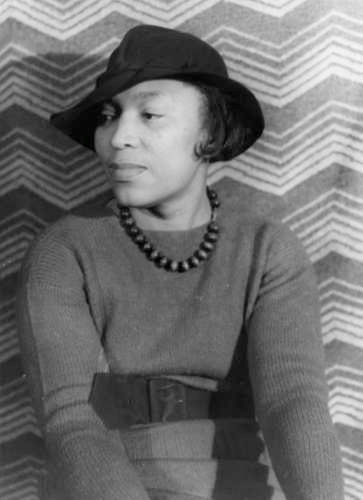
Zora Neale Hurston, author (1891-1960)

Alice Walker, author (b. 1944)
Toni Morrison, author (1931-2019)
Nina Simone, musician (1933-2003)
  • Mississippi Goddam (1964)
  • Sinnerman (1962)
  • I Put A Spell On You (1965)
  • I Wish I Knew How It Would Feel To Be Free (1967)

Sister Rosetta Tharpe, musician  (1915-1973)
  • This Train (1939)
  • Shout Sister, Shout! (1941)
  • Didn’t It Rain (1964)
  • Strange Things Happening Every Day (1944)

Aretha Franklin
, musician (1942-2018)
  • A Natural Woman (1968)
  • Respect (1967)
  • Think (1968)
  • You Make Me Feel (1968)


2. Black women’s political involvement and activism

  • Meet some of the Black women behind Louisville's movement for racial justice (The Courier-Journal, July 21, 2020)
  • ‘If not now, when?’: Black women seize political spotlight By CLAIRE GALOFARO and KAT STAFFORD, September 17, 2020
    • “People told us that education is key to being successful,” Brown said. “What did Black women do? Black women, out of any constituency group in this country, we enter college more than any other group in this country. Then why does the wealth not reflect that?”
    • "You have taken our votes for granted for years. But guess what?” she said. “It’s payback time: What are you going to do for us?”
    • “It’s about time we represent ourselves,” McNeal said. Now she’s a delegate to the Democratic National Convention.
  • Shirley Chisholm was the first African American woman in Congress (1968) and the first woman and African American to seek the nomination for president (1972). Her motto and title of her autobiography—Unbossed and Unbought—illustrates her outspoken advocacy for women and minorities during her seven terms in the U.S. House of Representatives.” Vice President-elect Harris styled her campaign colors after Chisholm’s as a tribute.
  • Septima Clark was a lifelong educator and activist. She received her bachelor’s from Benedict College in Columbia in 1942 and a master’s from Hampton (Virginia) Institute (now Hampton University) in 1945. She was active in the NAACP and involved in a lawsuit that secured equal pay for black teachers. She was known as the Queen Mother of the Civil Rights movement, teaching literacy courses and registering thousands to vote. She coordinated Citizenship Education courses at the Highlander Folk School in rural Tennessee, which is still active today.
  • Ida B. Wells-Barnett was a prominent journalist, activist, and researcher, in the late 19th and early 20th centuries. In her lifetime, she battled sexism, racism, and violence. Wells-Barnett also used her skills as a journalist to shed light on the conditions of African Americans throughout the South.

3. Embracing diversity of Black gender and sexuality

  • Audre Lorde - Self-described "black, lesbian, mother, warrior, poet" who dedicated her life and her creative talent to confronting and addressing injustices of racism, sexism, classism, heterosexism, and homophobia.
  • The Rev. Dr. Pamela Lightsey, the first out Black lesbian elder in The United Methodist Church, is the author of Our Lives Matter: A Womanist Queer Theology
    • "My Womanist perspective has been shaped by my experiences of being Black, woman and queer lesbian in a nation filled with people who have been hostile to all these very ways of existing. I try to encourage others to love themselves unconditionally and to do the work to move beyond survival to thriving." - Lightsey

4. Criminal justice reform

5. Black women in higher education

  • Black Women Are the Most Educated Group in the US
  • From 2000–2001 to 2015–2016, the number of bachelor's degrees earned by Black students increased by 75% and the number of associate degrees earned by Black students increased by 110%.
  • The numbers of Black students enrolled in master's degree programs nearly doubling between 1996 and 2016
  • A 2014 study shows the percent of Black women enrolled in college in relation to their other race-gender groups.
  • Black women are also starting to outpace other groups in earning degrees. 
  • Although Black women are 12.7% of the female population in the US, they make up over 50% of the number of Black people who earn postsecondary degrees.
  • Percentage-wise, Black women outpace white women, Latinas, Asian/Pacific Islanders, and Native Americans.
Dr. Kaila Story, Associate Professor/Audre Lorde Endowed Chair, University of Louisville 

PhD-African American Studies, Temple University, 2007.
Podcast: Strange Fruit: Musings on Politics, Pop Culture, and Black Gay Life  

Dr. Story is Associate Professor, Women's, Gender and Sexuality Studies, with a joint appointment in the Department of Pan-African Studies. She holds the Audre Lorde Chair in Race, Class, Gender, and Sexuality Studies.

She lives in Louisville with her wife, Missy, and has created a number of courses at the university that deal with gender, sexuality, race, and the intersectionality of those identities.

Some of those courses include Black Lesbian Lives and Queer Perspectives in Literature and Film:
“Because my identities rested in those other intersections — being a lesbian and being an African American — I got into a job where I was able to create all these kinds of courses,” Story said.

She had an op-ed published in The Courier-Journal in 2019: “Learning about our black and Latinx LGBTQ+ history is necessary for our survival.”

Dr. Debra J. Mumford, Seminary Dean; Frank H. Caldwell Professor of Homiletics at Louisville Seminary

Howard University B.S.; 
American Baptist Seminary of the West, M.Div.; 
Graduate Theological Union M.A.B.L. and Ph.D.
  • Dr. Mumford, is an ordained minister in American Baptist Churches, USA, and affiliate minister with the Alliance of Baptists.
  • Since 2008, Mumford has served as a mentor for the Louisville Youth Group, a grassroots organization that provides resources and a safe space for gay, lesbian, bisexual, transgender and questioning young people ages 14 to 20.
  • "The world in which we live is desperately in need of prophetic voices: voices that speak against injustice and demand both personal and communal accountability. In my classroom, I help students think critically not only about the biblical text and homiletic theory, but about the living texts of their lives, their communities, and their world so they might find and develop their prophetic voices for preaching the gospel of Jesus Christ." -Debra J. Mumford
  • You can listen to the sermon she preached for the Fall 2020 Convocation:

**********

This is part of my final project for "Womanist Interpretation of the Hebrew Bible.":

Key Terms in Womanist Bible Interpretation

Essay summaries:

Get new posts in your email:

Causes for Concern

Listed below are brief descriptions of five of the major causes of concern for Black women that we covered in my course on Womanist Interpretation of the Hebrew Bible. I compiled this information from my class notes as my classmates presented on these topics.

1. Intersectionality/matrix of domination

"Intersectionality" was first used by legal scholar, KimberlĂ© Williams Crenshaw, and it refers to “overlapping and intersecting social identities and related systems of oppression, domination, or discrimination.” As Crenshaw explains in her Ted Talk, "The urgency of intersectionality,”  discrimination can be multiplied or overlooked when it happens at these intersections of oppression. A white woman may face discrimination because of her gender. A black woman may face discrimination because of her race and her gender. A black queer woman may face discrimination because she is queer and black and a woman. 

The “matrix of domination” is a theory that explains interconnected issues of oppression dealing with race, class, and gender, and how power relations are organized. Patricia Hill Collins introduced this theory in her book, Black Feminist Thought. She says that in society, power relations are organized by four interrelated domains to maintain the status quo: 

  • Structural (organizes societal oppression) - Large-scale interlocked institutions perpetuate the subordination of Black women.
  • Disciplinary (manages oppression) - Government/surveillance technologies shape social organization through policies and rulings. 
  • Hegemonic (justifies dominance) - As society changes over time, old ideas that support a dominant group are refashioned throughout time in society.
  • Interpersonal (affects us all in everyday life) - Routinized micro-level daily interactions support the subordination of others.  
2. Violence and domestic abuse

"Domestic violence occurs when a person uses physical violence, coercion, threats, intimidation, isolation, stalking, emotional abuse, sexual abuse or economic abuse to control another partner in a relationship. Domestic violence can be a single act or a pattern of behavior in relationships, which encompass dating, marriage, family and roommate relationships.” - University of Michigan

For Black women, sexual assault and violence are incredibly pervasive issues that routinely go unreported and under-addressed:
Why do so many choose not to report?
  • History of abuse from law enforcement
  • Black women are less likely to be believed
  • George Town University: “Black women are seen as less innocent”
  • 91% of Black women are assaulted by Black men. Internal and external pressure to not report.
  • Pressured to stay in the relationship
  • Religious spaces or convictions (terrible theology) can be a contributing factor for staying with the abuser.
3. Black female poverty
  • In 2018, 21.4% of Black women lived in poverty (3.4 million)
  • Black female-headed families: Nearly 2 in 5 (38.8%)
  • There is a lack of income mobility - people get trapped in poverty.
  • Poverty dehumanizes people. It suffocates, removes agency, and puts people in survival mode. It destroys innocence, makes women invisible, takes away their voice, causes an inferiority mindset (like Hagar to Sarah in Genesis), causes exploitation (in the workplace and otherwise), causes parental absenteeism (because they don’t have a choice about how much they have to work to put food on the table).
4Underrepresentation or bad representation of Black women (in STEM)
  • Underrepresentation is when members of a group are not consistently present in representative bodies in the numbers roughly proportionate to their numbers in the general population.
  • Underrepresentation coincides with the access to and exercise of power.
  • African American women are underrepresented in STEM fields. Only 29% of women are involved in science and engineering fields and minority women represent fewer than 1 in 10 employees in science and engineering jobs.
  • Why are they so severely underrepresented? Because of ongoing racist and prejudiced ideology that persists in American society.
  • Watch Raven the Science Maven's  TedX talk: You Don't Look Like A Scientist! 
5. Politics of respectability
  • An effort towards enacting social, political, or legal change by creating narratives about marginalized people that are intended to show that they share similar morals and values with the dominant or mainstream culture.
  • This phrase was first coined by Dr. Evelyn Brooks Higginbotham in her book, Righteous Discontent: The Women’s Movement in the Black Baptist Church, 1880-1920 (1993).
  • Higginbotham was awarded the National Humanities Award by Barack Obama in 2014.
    “When I was writing about it, I was interested in how these people who were primarily maids and teachers, for the most part this is a movement made of low-income women, how do they fight for their civil rights? How do they fight for greater voice in their own communities and especially in the churches with these men? As I listened to them in my head give their speeches, as I read their minutes, as I look at the words that they use, I came up with this concept of the politics of respectability, because it is political.”  – Evelyn Brooks Higginbotham, 2015 Interview
  • The problem with respectability politics is that it demands that marginalized people force themselves to fit with respectability narratives in order to receive fair and just treatment.
  • It does not address the systemic issues of prejudices that lead to the problematic narratives.
  • It puts the responsibility of avoiding harm or inequality on the marginalized group.
  • The dominant group can change the meaning of “respectability” to suit their agenda.
Get new posts in your email:

Rev. Dr. Wil Gafney: “A Womanist Midrash of Delilah: Don’t Hate the Playa Hate the Game”

Rev. Wil Gafney, Ph.D. wilgafney.com
Twitter: @WilGafney

Author of Womanist Midrash: A Reintroduction to Women of the Torah and of the Throne, a commentary on Nahum, Habakkuk, and Zephaniah; Daughters of Miriam: Women Prophets in Ancient Israel; and co-editor of The Peoples’ Bible and The Peoples’ Companion to the Bible.

**********

“A Womanist Midrash of Delilah: Don’t Hate the Playa Hate the Game” by Dr. Gafney might be my favorite academic essay I have ever read. (And I have read a lot!) She explains in a footnote that she is "framing Delilah's story in hip-hop lyrics" that have taken on different meanings from the way they were originally intended ("which can be sexist, misogynist, homophobic, and glorifying of violence" (50).  
footnote pg 50

Gafney centers Delilah, making her the main character of interest instead of Samson/Shimson. Gafney says she sees Delilah as a ‘bad woman” who “uses her sexuality to her own benefit within the overarching androcentric and patriarchal power systems” (50). Gafney tells us that a womanist reading of Delilah sees her as her own woman who makes her own decisions about her body and her life and for once, actually ends up better off than expected in the “androcentric scriptures of Israel” (50). Delilah plays the men’s game but she beats them at it.

Main points:

  1. Traditional “heteropatriarchal” readings of this text focus on Samson and glorify him as the hero of the story ("a playa") because the text is written with him as the main character and Delilah as a supporting character (51). I love all of the references to hip-hop and various vernacular phrases throughout this article, and the points Gafney uses them to make, such as when she says, “Women who object to normative readings of the saga might well be told, 'don’t hate the playa, hate the game' (Marrow and Ascencio 1999) since the game is biblical, hating or challenging the game has theological implications—since the game is presented as God-ordained” (51) Gafney then reminds us that womanist biblical interpretation “does not hesitate to talk back to the Bible or its God” (51). This gives such wonderful freedom to the interpreters of the text to push back on those traditional power dynamics.
  2. Gafney talks about Samson’s mother, who is not named in the text. There is a tradition in rabbinic interpretation that provides names for some of the women who were not given names in the text. After telling us that the name given to Samson’s mother in that tradition is “Zlelponith”, that is what Gafney calls her in the rest of the article (56). 
  3. Samson’s wife is also nameless in the text. Gafney says her story specifically influences Delilah’s choices in that Delilah learns from the infamous story about Samson and his wife. Gafney calls her “Yashirah” based on the aspects that Samson was drawn to, referencing Judges 14:3. The text blames her for her fate because she is the “other”: a “foreign” woman from a “foreign” place “out in public looking like that” (57). Gafney says that as a womanist she is “compelled to read from her position” and points out that the text itself is biased against because of her otherness, an outsider, a foreigner, and the people who wrote and compiled the text thought of her people and culture as inferior and did not see the divine image in her (57). Samson’s wife (Yashirah) only has one “sorrowful bit of agency” in this story - she cried every day of their seven-day wedding feast (Judg 14:17). Gafney says “she pressed him to the point of oppressing him. She pressed her way to her own deliverance” (59). However many translators say she “nagged” him for the answer to the riddle in order to save her life and her family’s lives.
  4. Gafney reiterates several times what she must do or cannot do as a womanist interpreter. Reflecting on Samson’s revenge when he sets foxes on fire to destroy the Philistine crops and at least thirty random men are killed along with his wife and her father she says: “As a womanist, I cannot ignore this wanton act of cruelty or its uncritical acceptance in the many sermons and Sunday school lessons I have heard on this text. [...] before moving to Samson's next woman or on to Delilah, I must pause in womanist solidarity with Yashirah, mark and mourn her passing. I do not know the name her mother called her. I call her Yashirah, good and pleasing in herself, to herself, not dependent on the approval of any man.” (60)
  5. Next, we learn about an unnamed foreign (Philistine) sex-worker (Judg 16:1) who Gafney names “Arishat” (61). Gafney uses her “sanctified imagination” to conclude that Delilah surely would have heard all of these stories of Samson’s violence and how he treated these other women (61).  Gafney points out that Samson’s love for Delilah is one-sided. The text does not mention her having feelings for him and does not care about her motives. Gafney argues that Delilah and Samson are not married because the text does not say that they are (64). And even though Samson is the one having sex with multiple women, few sermons address Samson’s promiscuity, nor is he criticized within the text for this or for all of his acts of violence (65).
  6. Gafney describes Delilah as “grown”: a single, independent woman who is financially secure, which is a dangerous thing for the patriarchy (65).
    Since it seems Samson is living with Delilah in her house, can she say of her house like Destiny's Child, "I bought it"?

    Delilah uses her wit to outsmart Samson and uses his own arrogance against him. Gafney also points out that unlike most of the women in the Bible, Delilah makes it to the end of this story not only alive but free and much wealthier (70). [Another delightful comment from Gafney: "Using my sanctified imagination I hear Delilah singing 'Bitch Better have My Money" by Rihanna (Pierre et al. 2015)" (70).] Delilah is not punished for her role in Samson’s death or forced to be under the authority of a man. Gafney’s fantastic conclusion to this article is that “Delilah is not tamed by her text. She is not rewarded with marriage or children. She does not need them. She can support herself. Delilah is free. She exits the text on her own terms. Like a boss” (71). 

Works Cited

Gafney, Wil. “A Womanist Midrash of Delilah: Don’t Hate the Playa Hate the Game” in Womanist Interpretations of the Bible: Expanding the Discourse. Edited by Byron, Gay L., and Vanessa Lovelace. Atlanta: SBL Press, 2016.

**********

This is part of my final project for "Womanist Interpretation of the Hebrew Bible.":

Key Terms in Womanist Bible Interpretation

Other essay summaries:

Get new posts in your email: